
Last updated: April 2026. Updated to include a comprehensive comparison of all transport options with current pricing and a side-by-side comparison table.
What is the Best Method for Transporting a Vehicle Long Distance?
When it comes to getting your car to your destination without making the drive yourself, most Canadians are weighing three realistic options: hiring a driveaway service, using a truck transport company, or simply driving it themselves. Each has genuine advantages and real tradeoffs; the right choice depends on your specific situation.
This guide breaks down all three options honestly, with a particular focus on the Canada-to-Florida route that most Canadian snowbirds are planning for. If you’re heading south for the winter — or relocating cross-border for any reason — here’s what you need to know before you decide.
Option 1: Driving it Yourself
The most obvious option is to simply do the drive yourself. But this option comes with hidden costs that aren’t always immediately apparently when running the numbers.
The numbers for a typical Ontario to Florida drive:
- Distance: approximately 2,100 km (Toronto to Tampa) to 2,500 km (Toronto to Miami)
- Driving time: 20-26 hours non-stop
- Realistic travel time: 2-3 days including overnight stops
- Estimated costs: $200-300 in fuel, $150-300 in accommodation, $100+ in meals
- Total out-of-pocket: $450-700+, plus wear on your vehicle
The case for driving yourself:
- No additional service cost beyond fuel and accommodation
- Complete control over your schedule and route
- You arrive with your car immediately
The case against:
- A 20+ hour drive is genuinely exhausting — most people break it into two or three days
- You’re adding 2,000+ kilometres to your odometer twice a year
- Winter driving conditions through the northern US states in November can be hazardous
- At the end of a long drive, you arrive tired rather than rested and ready to enjoy your destination
For many snowbirds, driving themselves made sense for the first few years. As they get older or their circumstances change, the appeal diminishes quickly. The question shifts from “should I drive?” to “what’s the best way to have my car transported?”
Option 2: Truck Transport
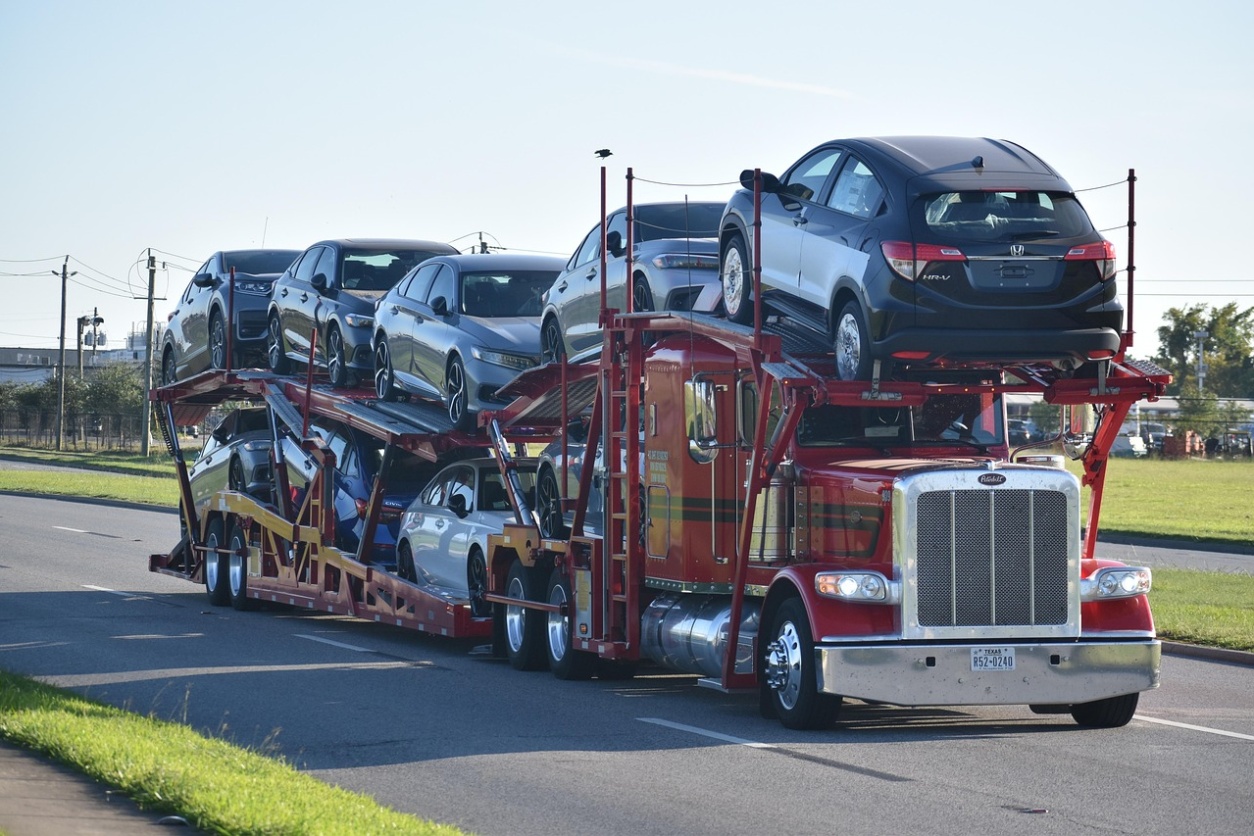
Truck transport — also called auto transport or car shipping — involves loading your vehicle onto a multi-car carrier truck and having it driven to your destination by a professional hauler. It’s the most widely known car transport option and has a large, established industry behind it.
How it works: You book with an auto transport company or broker, arrange a pickup date, and your vehicle is loaded onto an open or enclosed carrier alongside several other vehicles. The truck follows a planned route with multiple stops to drop off other cars before yours is delivered.
Open vs. enclosed carriers: Most truck transport uses open carriers, meaning your vehicle is exposed to the elements during transport. Enclosed carriers offer more protection but cost significantly more and are typically used for luxury, classic, or high-value vehicles.
Pros of truck transport:
- No mileage added to your odometer
- Established industry with many providers to choose from
- Enclosed options available for high-value vehicles
- Good option if preserving odometer reading is a priority (e.g., for leased vehicles)
Cons of truck transport:
- Strict cargo restrictions — most carriers prohibit personal items in the vehicle such as golf clubs, luggage, and household goods
- Scheduling is tied to the truck’s route and load, not your timeline — pickup and delivery windows are typically 1-3 day ranges rather than specific dates
- Delivery timelines are longer — trucks make multiple stops and can take 1-2 weeks for a Canada-to-Florida route
- Terminal-based logistics — some carriers require drop-off and pickup at depots rather than your door
- Cross-border truck transport adds customs paperwork complexity
- For less common routes, carriers wait until they have enough vehicles to fill a truck before dispatching, adding unpredictability to your timeline
What about rail? Some Canadian auto transport companies incorporate rail for part of the route, particularly for long domestic Canada routes. However, for Canada-to-Florida specifically, true rail transport isn’t a practical standalone option for individual consumers. The Amtrak Auto Train runs between Virginia and Florida only, which means Canadians would have to drive 10-14 hours just to reach the boarding point. If you’re curious about the Amtrak option specifically, see our dedicated guide.
Typical cost for Canada-to-Florida truck transport: Open carrier truck transport from Ontario to Florida typically ranges from approximately $1,800 to $2,100 CAD depending on pickup and drop-off locations, time of year, and carrier availability. Enclosed transport is significantly more expensive. Note that cargo restrictions mean you’ll need to arrange separate shipping for any belongings you want at your destination, which involves additional cost. There are other expenses you need to consider too, such as the cost of a rental car during the 1-2 week period you may be without your primary vehicle.
Option 3: Driveaway Service
A driveaway service is fundamentally different from truck transport. Instead of loading your vehicle onto a carrier, a professional driver actually gets behind the wheel and drives your car to its destination. The driver handles all the logistics, border paperwork, and communications along the way. You fly.
This is what Cross Country Valet does, and it’s a meaningfully different experience from truck transport in ways that matter significantly for snowbirds.
How it works: You book a pickup date and location. A vetted, professional driver meets you at your chosen address, takes the keys, and drives your car directly to your destination. There are no depots, no multi-stop routes, no other vehicles on the same truck. One driver, one car, one direct route. You receive updates throughout the trip and your car is delivered to your destination address.
Pros of driveaway:
- No cargo restrictions: Pack your car to the roof with luggage, golf clubs, household items, personal belongings. No weight limits, no restrictions. This alone can save hundreds of dollars in airline checked baggage fees or separate shipping costs.
- Door to door: Pickup at your Canadian address, delivery to your Florida door. No depots, no terminals, no arranging your own transportation at either end.
- Your schedule, not the carrier’s: You choose the pickup date and delivery date. No waiting for a truck to fill up or a carrier to reach your area.
- Faster delivery: A direct point-to-point drive typically means your car arrives in 2-3 days rather than the 1-2 weeks truck transport can take.
- Full border paperwork handled: For cross-border transport, the driveaway company handles all customs documentation on your behalf.
- Familiar comfort: Your car arrives packed with everything you need for months away from home, ready to use from the moment it arrives.
Cons of driveaway:
- Mileage added: Because the car is driven, kilometres accumulate on your odometer. For a Toronto to Tampa route that’s approximately 2,100 km each way. If preserving odometer reading is critical, truck transport may be preferable.
- Trust factor: You are entrusting someone else to drive your personal vehicle. This is the most common concern people have about driveaway, and it’s legitimate. The quality of a driveaway service depends entirely on how the company vets and manages its drivers. Some driveaway services, for example, source their drivers from online forums or classified ads with no meaningful vetting and limited accountability. At Cross Country Valet, by contrast, we work with the same team of drivers on every job: people we know personally, have worked with repeatedly, and have thoroughly screened.
Typical cost for Cross Country Valet Canada-to-Florida: Most Ontario to Florida routes with Cross Country Valet fall in the range of $1,700 to $1,900 CAD. This includes door-to-door service, all border paperwork, and no cargo restrictions. That means the cost of transporting your belongings in the car is effectively zero, which is a meaningful saving compared to truck transport where you’d need to arrange and pay for separate shipping of your personal items.
Side-by-Side Comparison
| Driving Yourself | Truck Transport | Driveaway (Cross Country Valet) | |
|---|---|---|---|
| Cost (Ontario to Florida) | $450–700+ (fuel, hotels, meals) | Varies by carrier — get a quote | $1,700–1,900 CAD |
| Delivery time | 2–3 days | 1–2 weeks | 2–3 days |
| Door to door | Yes | Sometimes | Yes — always |
| Cargo in vehicle | Yes | No | Yes — no restrictions |
| Mileage added | Yes — you drive it | No | Yes — driver drives it |
| Your schedule | Yes | No — carrier’s schedule | Yes |
| Border paperwork | You handle it | Carrier handles it | Fully handled for you |
| Who drives | You | Truck driver (multiple cars) | Vetted personal driver |
| Best for | Short trips, younger drivers | Leased or high-value vehicles | Snowbirds, relocators, anyone wanting convenience |
Which Option is Right for You?
If your top priority is minimizing mileage on a collectible or luxury car, a truck transport service Choose truck transport if:
- Preserving your odometer reading is essential — for a leased vehicle or a vehicle you’re planning to sell
- You own a luxury, classic, or exotic vehicle that you want in an enclosed carrier
- You have no personal items to transport and don’t need your car on a specific date
Choose driving yourself if:
- You genuinely enjoy road trips and have the time
- You’re making a shorter domestic move where the drive is manageable
- Cost is the primary constraint and you’re comfortable with the time and wear
Choose driveaway if:
- You’re a snowbird heading south for the winter and want your car packed with everything you need for months away from home
- You want a specific pickup and delivery date rather than a carrier’s window
- You want door-to-door service with no depot logistics
- You want your car to arrive in 2-3 days rather than 1-2 weeks
- You want the border paperwork handled entirely on your behalf
For most Canadian snowbirds heading to states like Florida, Arizona, California, or Texas, driveaway is the most practical, most convenient, and most flexible option. The ability to pack your car with everything you need for a 3-6 month stay is a benefit that truck transport simply cannot offer, and one that regularly saves clients hundreds of dollars in baggage fees and separate shipping costs.
Heading down to the U.S. this winter? Learn more about our car transport service for snowbirds.
FAQs About Vehicle Transport
Is driveaway cheaper than truck transport for Canada to Florida?
On a like-for-like basis, truck transport has a lower upfront cost than driveaway for most Canada-to-Florida routes. However the comparison changes significantly when you factor in what truck transport doesn’t include — cargo restrictions mean you’d need to pay for separate shipping of your personal belongings, or pay airline baggage fees for everything you want at your destination. When total costs are compared, driveaway is often comparable or better value for snowbirds who plan to pack their car.
Will a driveaway service add a lot of kilometres to my car?
A typical Ontario to Florida route adds approximately 2,100-2,500 km to your odometer one way. For most snowbirds making this trip twice a year, that’s 4,000-5,000 km annually, or roughly equivalent to two months of average city driving. For most vehicle owners this is not a meaningful concern. If you have a strict mileage limit, such as on a lease, truck transport is a better fit.
How long does truck transport take for Canada to Florida?
Most truck transport companies estimate 7-14 days for a Canada-to-Florida route, though timelines can vary depending on carrier availability, route, and the number of other vehicles on the load. During peak snowbird season in fall and spring, timelines can be longer due to high demand.
How long does driveaway take for Canada to Florida?
Most Cross Country Valet deliveries from Ontario to Florida are completed in 2-3 days. Because it’s a direct point-to-point drive with no other stops, delivery timelines are both faster and more predictable than truck transport.
Can I put personal belongings in my car during truck transport?
Generally no. Most truck transport companies prohibit or significantly restrict personal items in vehicles during transport. This is both a safety concern and an insurance liability issue for the carrier. If you want your belongings at your destination, you’ll need to arrange separate shipping or check bags on your flight.
Can I put personal belongings in my car during driveaway?
Yes, there are no restrictions on what you pack in your car with Cross Country Valet. Golf clubs, luggage, clothing, household items, sporting equipment — fill it up. This is one of the most significant practical advantages of driveaway over truck transport for snowbirds.
Is driveaway safe? How do I know who is driving my car?
This is the most common concern people have about driveaway — and it’s a legitimate one. The answer depends entirely on how the driveaway company manages its drivers. At Cross Country Valet, we work with the same team of vetted, personally known drivers on every job. We don’t source drivers from classified ads or forums. Every driver is someone we have an ongoing relationship with and personal accountability for.
What about rail transport for Canada to Florida?
True rail transport from Canada to Florida isn’t a practical standalone option for individual consumers. Some Canadian auto transport companies incorporate rail for domestic Canadian routes, but for cross-border Canada-to-Florida moves, rail doesn’t offer a meaningful advantage. The Amtrak Auto Train runs between Virginia and Florida only, which means Canadians would have to drive 10-14 hours just to reach the boarding point. See our dedicated Amtrak Auto Train guide for a full breakdown.
Does Cross Country Valet handle the border paperwork?
Yes, we handle all customs documentation for cross-border vehicle transport on your behalf, including CBP Form 3299 for US entry and coordination with a customs broker when required. You provide us with the necessary information and we take care of the rest.